
What Is a Greenville County Court Docket
A docket is a chronological list of the filings and events in a case. It is not the full file. Think of it as the table of contents. Each line marks something that happened, such as a complaint filed, a motion filed, an order entered, a hearing scheduled, or a final disposition. The docket tells you the order of events and the dates. The full case file holds the actual documents behind each of those lines.
People mix up two words here. A docket is the case-by-case history of events. A roster is the calendar of cases set for a given court day or term. A Greenville County court dockets search and a roster search answer different questions. The docket answers what has happened in one case. The roster answers which cases are set to be heard. Both update on their own schedule, and both can lag behind the paper file.
Greenville County court dockets cover several courts. Circuit Court splits into Common Pleas for civil cases and General Sessions for criminal cases. Family Court keeps its own docket for domestic and juvenile matters. Each court runs its calendar a bit differently.
How to Find Greenville County Court Dockets Online
The county routes docket and roster links through its Court Support office. From there you can reach Common Pleas rosters, the General Sessions docket, and the Family Court docket. For the case history itself, the Greenville County Public Index shows the docket actions inside each case record. The two sources work together. Use Court Support for the calendar of set cases, and use the Public Index for the action list inside one case.
Here is a simple path to a docket or a court date.
- Open the Court Support page and pick the docket or roster for the court you need, such as Common Pleas, General Sessions, or Family Court.
- For a single case, open the Public Index instead, accept the disclaimer, and validate the security code.
- Search by party name or case number. In a criminal case, the arrest warrant number is the case number.
- Click the case number, then open the action tabs to read the docket entries in date order.
Rosters and dockets can update at a different pace than the case summary page, so check both when a court date matters. If a date is close, confirm it with the court before you travel.
Greenville County Courts and Their Dockets
South Carolina runs one statewide court system, so the same court names and rules apply across the state. Greenville County is part of the 13th Judicial Circuit, which it shares with Pickens County. Circuit Court is the main trial court and posts the busiest dockets. Family Court keeps a separate docket. The summary courts, which are the Magistrate and Municipal courts, handle their own smaller calendars. The table below shows the main courts and the cases that fill their dockets.
| Court | Docket Covers | Case Types |
|---|---|---|
| Circuit Court (Common Pleas) | Civil rosters and terms | Lawsuits, foreclosures, judgments, liens |
| Circuit Court (General Sessions) | Criminal docket and terms | Felonies and serious misdemeanors |
| Family Court | Domestic and juvenile calendar | Divorce, custody, support, adoption |
| Probate Court | Estate and protective matters | Wills, estates, guardianship, commitment |
| Magistrate Court | County summary calendar | Small claims to $7,500, minor crimes, traffic |
| Municipal Court | City summary calendar | City ordinance and traffic cases |
The case-flow chart is simple. Summary courts feed into Circuit Court, which feeds the appellate courts above it.
Case flow: Magistrate / Municipal Court › Circuit Court (Common Pleas & General Sessions) › Court of Appeals › Supreme Court
For court-by-court contact details, see the Greenville County Circuit Court and Magistrate Courts pages. Note: the county reports that 21 magistrates serve across seven summary courts, so the right docket depends on which court hears your case.
Reading a Greenville County Docket Entry
Each docket line packs a few facts into a short row. Once you know the parts, the list reads quickly. The action tells you what happened. The date tells you when. The party tells you who filed it. A document icon, when present, links the image behind the entry. The table below breaks down the fields you see on a Greenville County court dockets record.
| Field | What It Shows |
|---|---|
| Entry Date | The date the filing or event was entered on the case. |
| Action / Event Type | Summons filed, motion filed, order entered, hearing set, judgment, or disposition. |
| Party Filing | Which side filed the document, such as plaintiff, defendant, or the State. |
| Hearing Detail | Date, time, judge, and courtroom for a set hearing or roster slot. |
| Financial Entry | Fines, fees, bond, or payments tied to that action. |
| Document Link | A document icon opens the image where one is available. |
Some terms repeat across dockets. A continuance is a postponement. A disposition is the final outcome. A roster is the scheduled list of hearings. Match each entry to its date and you can follow the whole case in order.
Rules That Govern Greenville County Dockets
Court calendars do not run on guesswork. State court rules set how cases move, how they get set for trial, and how appeals reach the higher courts. Those rules shape what shows up on a Greenville County court dockets record and when. The appellate side has its own rule set. The image below shows the South Carolina Appellate Court Rules page.
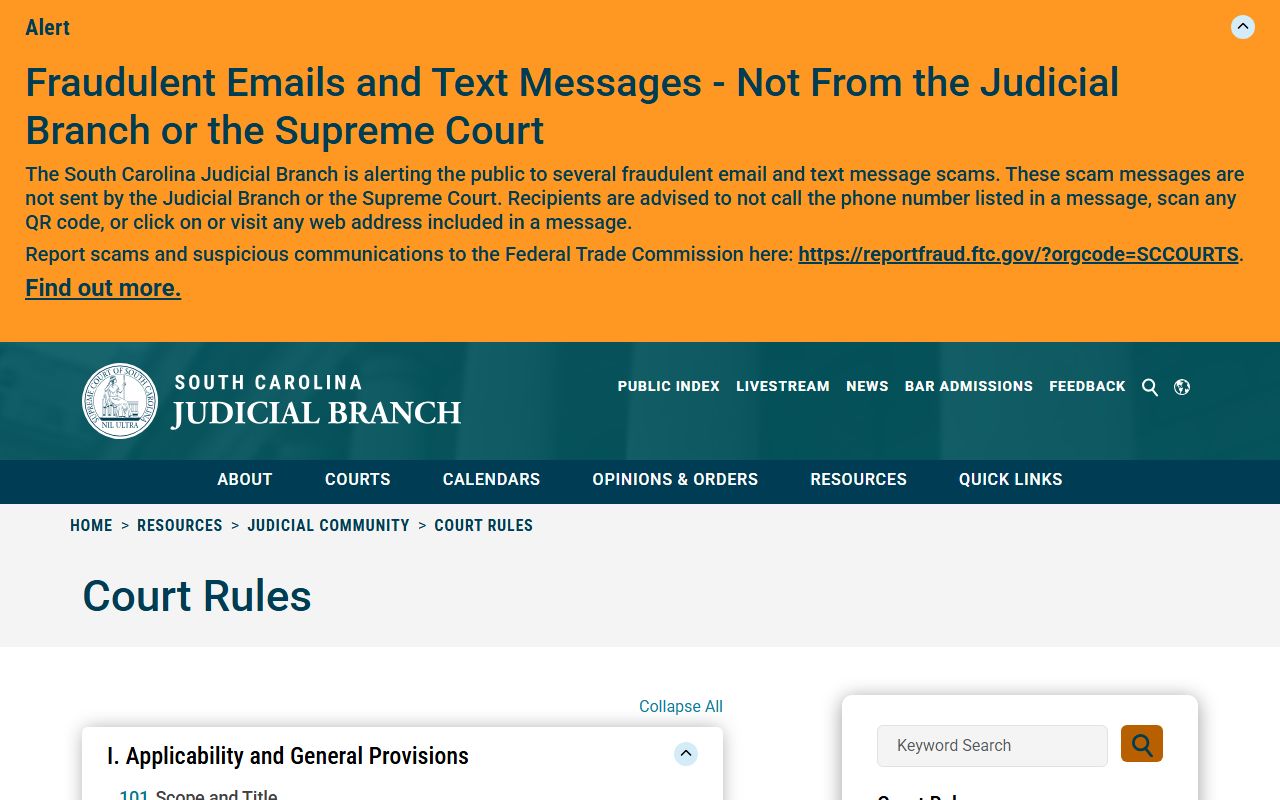
Those appellate rules set how a case leaves the 13th Circuit and reaches the Court of Appeals or the Supreme Court. The civil side has its own rules too. The image below shows the South Carolina Rules of Civil Procedure, which include Rule 53 on masters and referees.
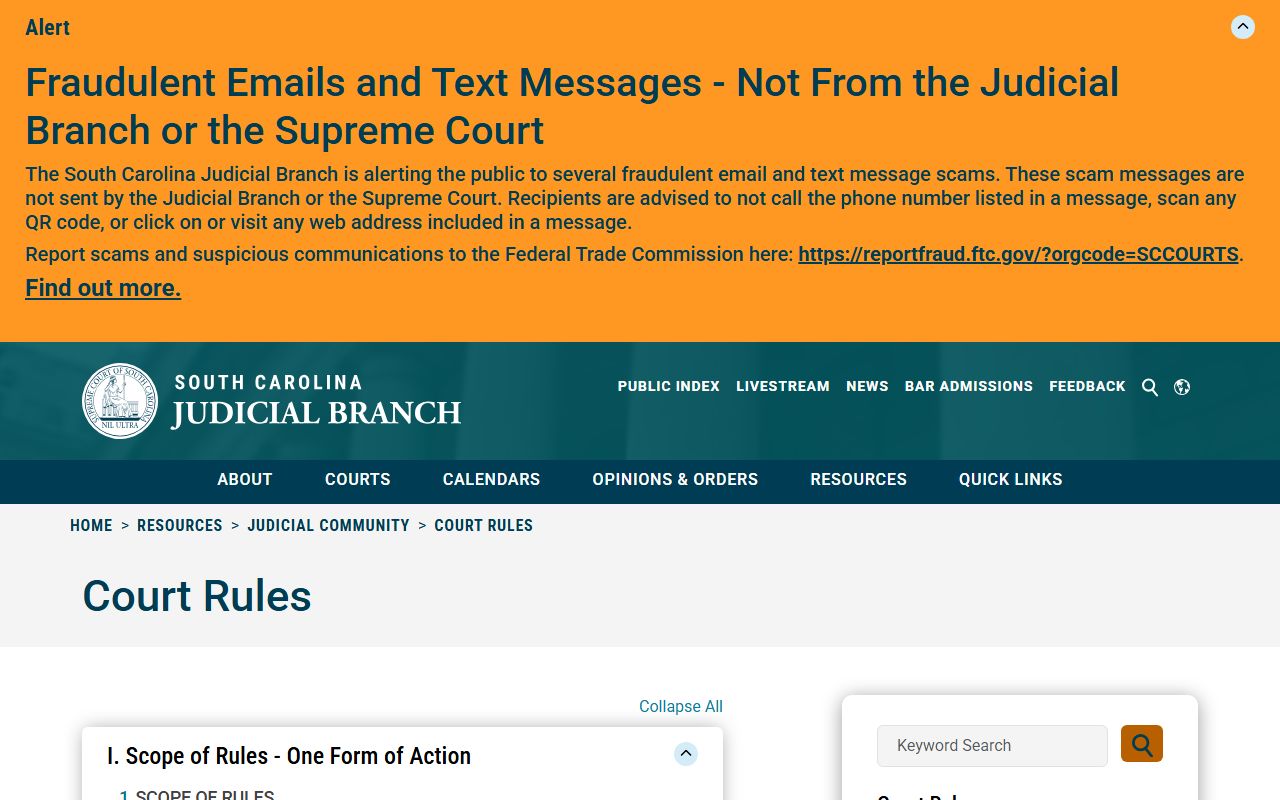
Rule 53 matters in Greenville because the county uses a Master-in-Equity to hear referred civil and foreclosure matters, and those cases carry their own docket and roster.
Summary and Municipal Court Dockets
Not every Greenville County court dockets entry comes from the big downtown courthouse. The summary courts handle a high volume of small civil claims, evictions, traffic, and minor crimes. City municipal courts run their own calendars too. Some city courts feed cases into the statewide Public Index, and some do not, so a municipal date may need a call to that city court. State law sets the base rules for these courts.
Municipal court authority comes from a specific part of the state code. The image below shows S.C. Code Title 14, Chapter 25, the statute for Municipal Courts.
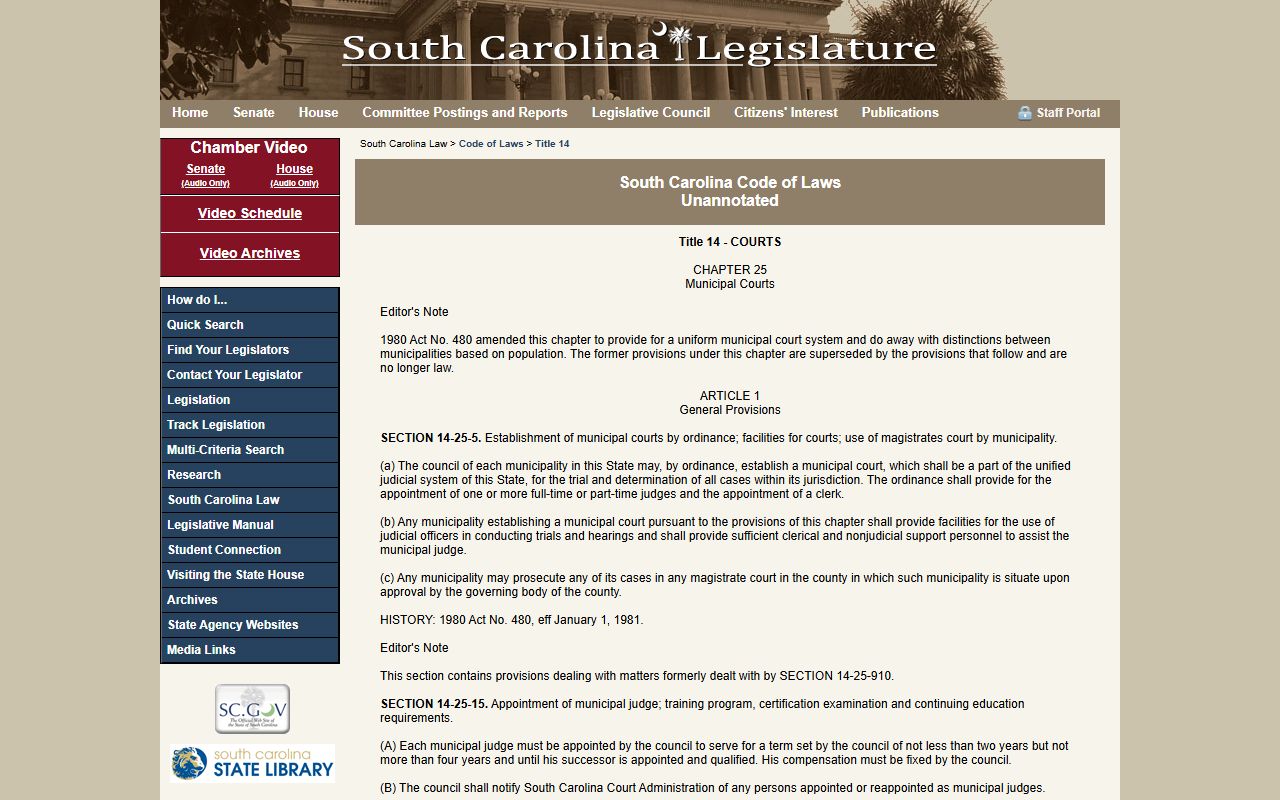
That statute explains why Greenville, Greer, Mauldin, Fountain Inn, Simpsonville, and Travelers Rest each run a separate municipal docket. For small claims, evictions, and county summary matters, the Magistrate Courts page covers the venue rules.
Restricted Dockets in Greenville County
Some dockets are not open to the public. Family Court juvenile and adoption matters are confidential. Probate Court handles involuntary commitment proceedings, which involve emergency admission and judicial review rather than a public criminal case. Those mental-health files are sensitive and are not open like a normal docket. The image below shows the Probate Court mental health page.
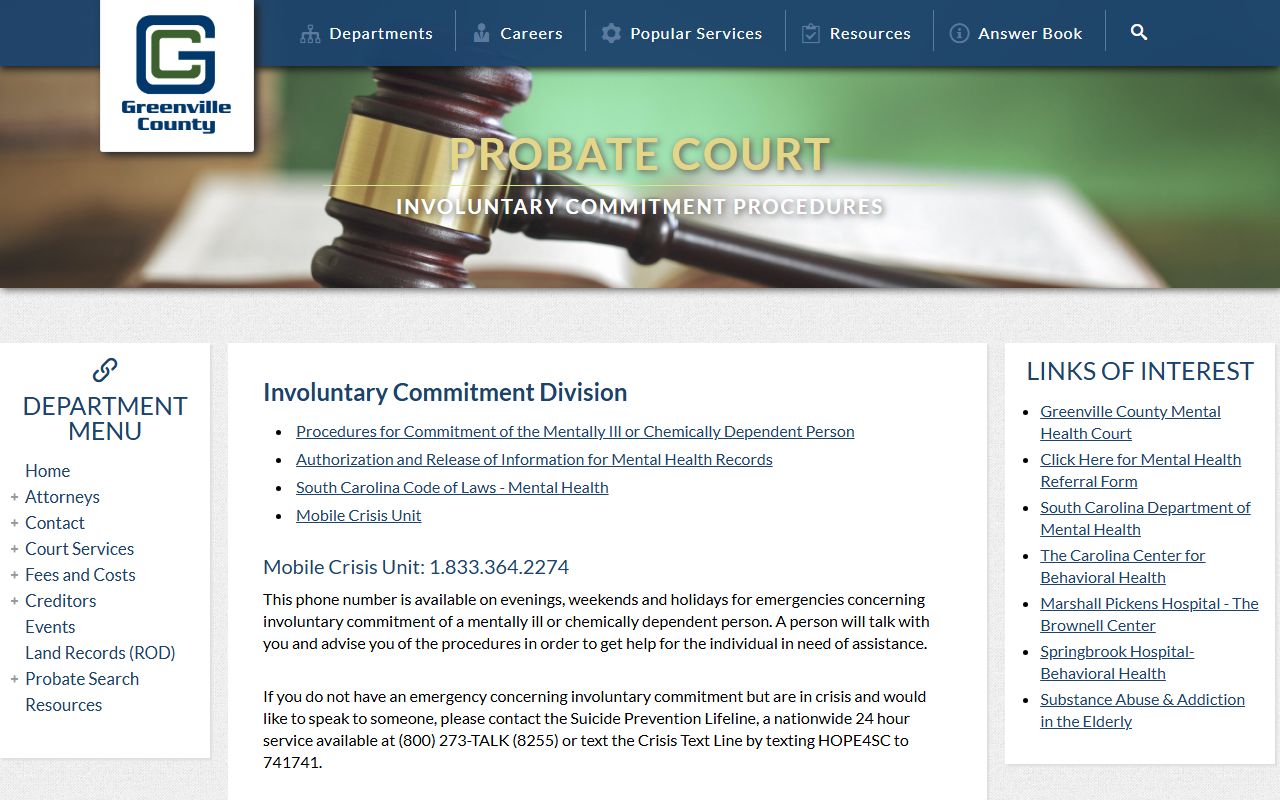
That page covers involuntary commitment, which runs on a closed docket. Family Court jurisdiction over juveniles and adoptions also keeps those calendars closed. State law sets the scope of Family Court. The image below shows S.C. Code Title 63, Chapter 3, the Family Court jurisdiction statute.
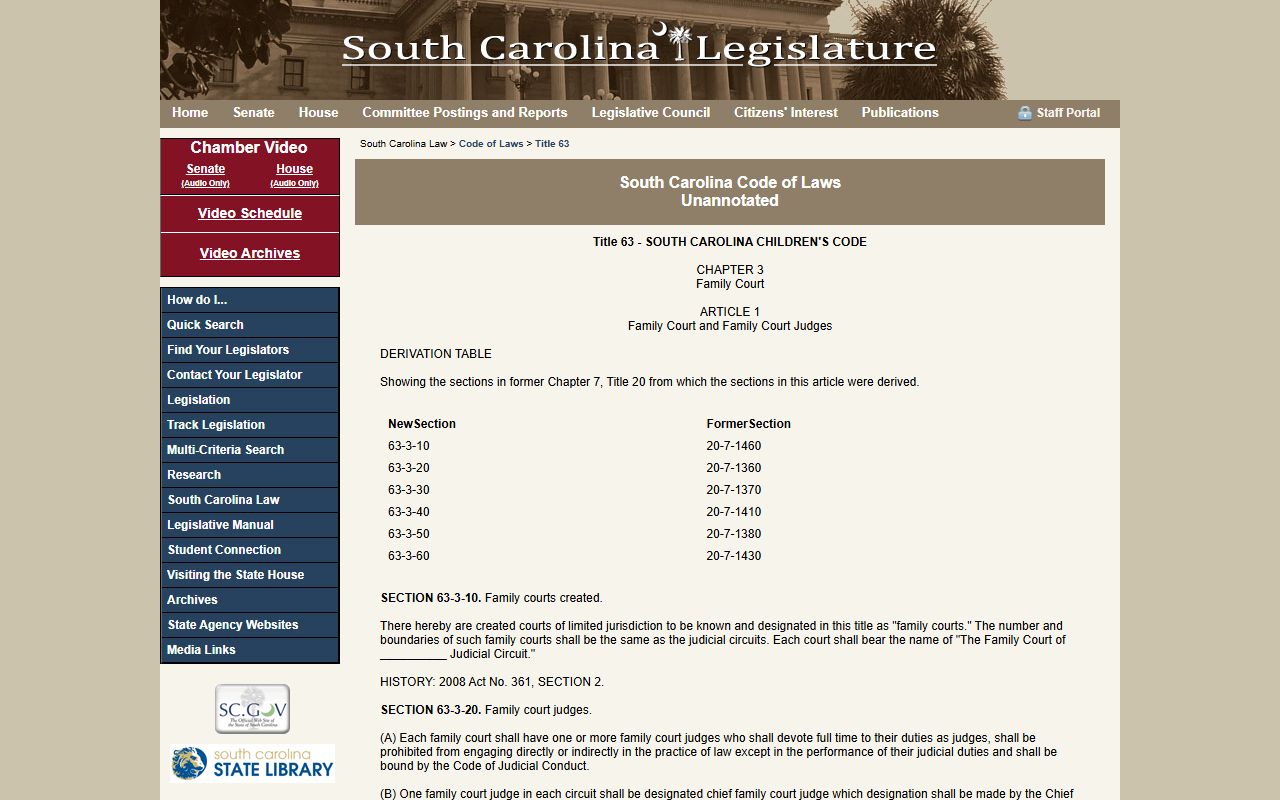
That statute explains why divorce and custody dockets sit in Family Court and not in Probate Court, and why juvenile matters stay off the public calendar.
Docket vs. Full Case Record
A docket and a full case file are not the same thing, and knowing the difference saves time. The docket is the short list of events. The full record is the stack of documents behind those events. For a court date or a quick status, the docket is enough. For motions, orders, or proof in another matter, you need the full file and often a certified copy. The table below compares the two.
| Docket | Full Case Record | |
|---|---|---|
| Format | List of dated entries | Full filed documents |
| Access | Often online and free | May need a copy fee or a courthouse visit |
| Use | Track case progress and court dates | Legal review, evidence, certified proof |
For the full file, the Greenville County court records page explains how to pull document images and order certified copies.
Missing a Greenville County Court Date
A court date on the docket is not a suggestion. If you skip a set hearing, a judge can issue a bench warrant, which is a warrant for failure to appear. In a criminal case, that can mean arrest and a bond review. In a civil case, you can lose by default. The docket and roster exist so parties know where to be and when. National research on court dates and pretrial outcomes is tracked by federal agencies. The image below shows the Bureau of Justice Statistics, which publishes court and corrections data.
The Bureau of Justice Statistics tracks national patterns, not single Greenville cases, but it shows why courts press parties to keep their docketed dates. If you have a bench warrant, see the Greenville County warrant records page. Note: if you are unsure of your court date, confirm it with the clerk before the day arrives rather than relying only on an online roster.