
Greenville County Jail Roster Overview
The Greenville County Sheriff's Office, led by Sheriff Hobart Lewis, runs the Adult Detention Center on McGee Street in downtown Greenville. The county posts an online inmate search portal that lists people held at the jail. Before you can search, you must read and accept a disclaimer on the county inmate search disclaimer page. The disclaimer is blunt about limits. The county does not warrant that the data is accurate, reliable, or current. Inmate status changes fast. Most people listed are pretrial detainees, which means they have been charged but not convicted. An arrest is not a conviction.
The roster covers the county jail only. It does not show people held in state prison, in federal custody, or by immigration authorities. A person sentenced to state time is moved to the South Carolina Department of Corrections and drops off the county list. The county warns that the online data should not be relied on for legal action, and that official records live in the respective county offices where they can be reviewed in person.
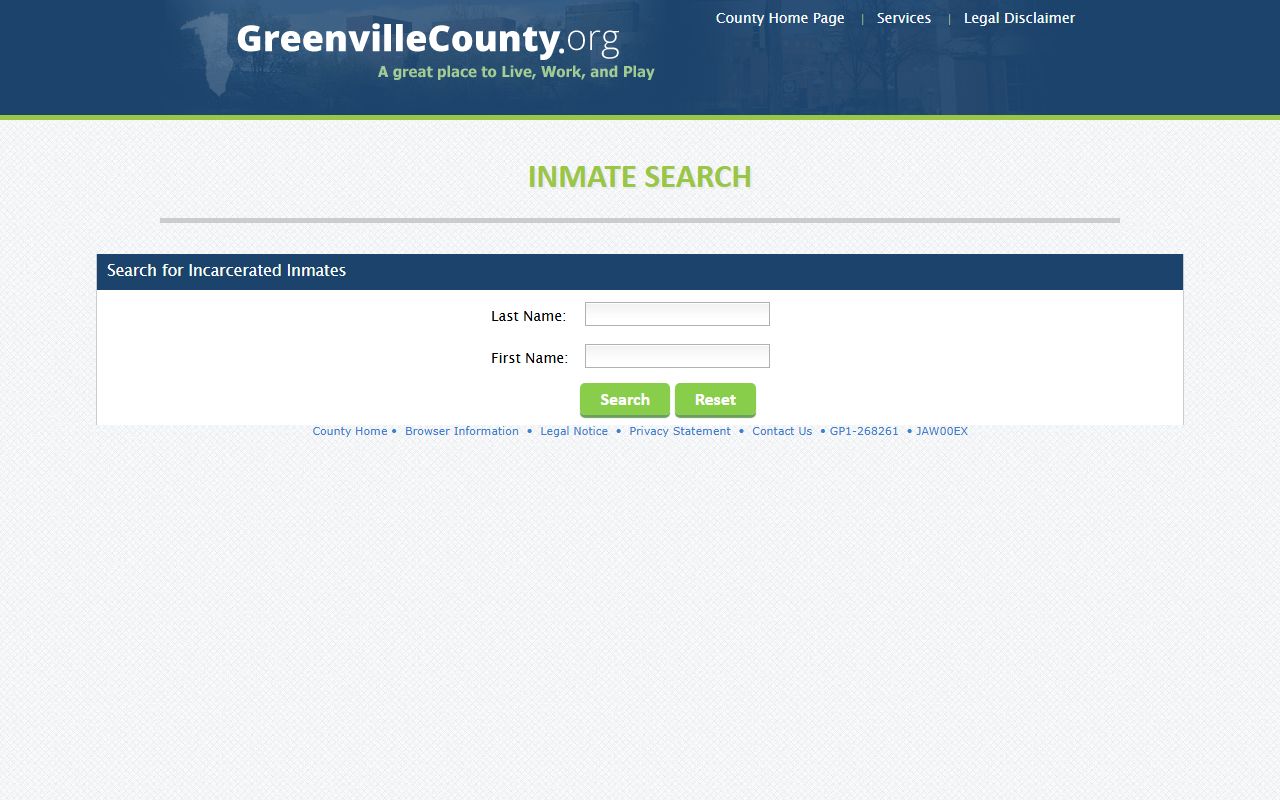
The image above shows the county inmate search portal, which is where a roster lookup begins. Once you accept the terms, the portal lets you search by name to confirm whether a person is in custody.
How to Use the Greenville County Inmate Roster
The roster is free and open to the public. You do not need an account. You do need to clear the disclaimer first. The screenshot below shows that disclaimer screen, which lays out the county's warnings before any search runs.
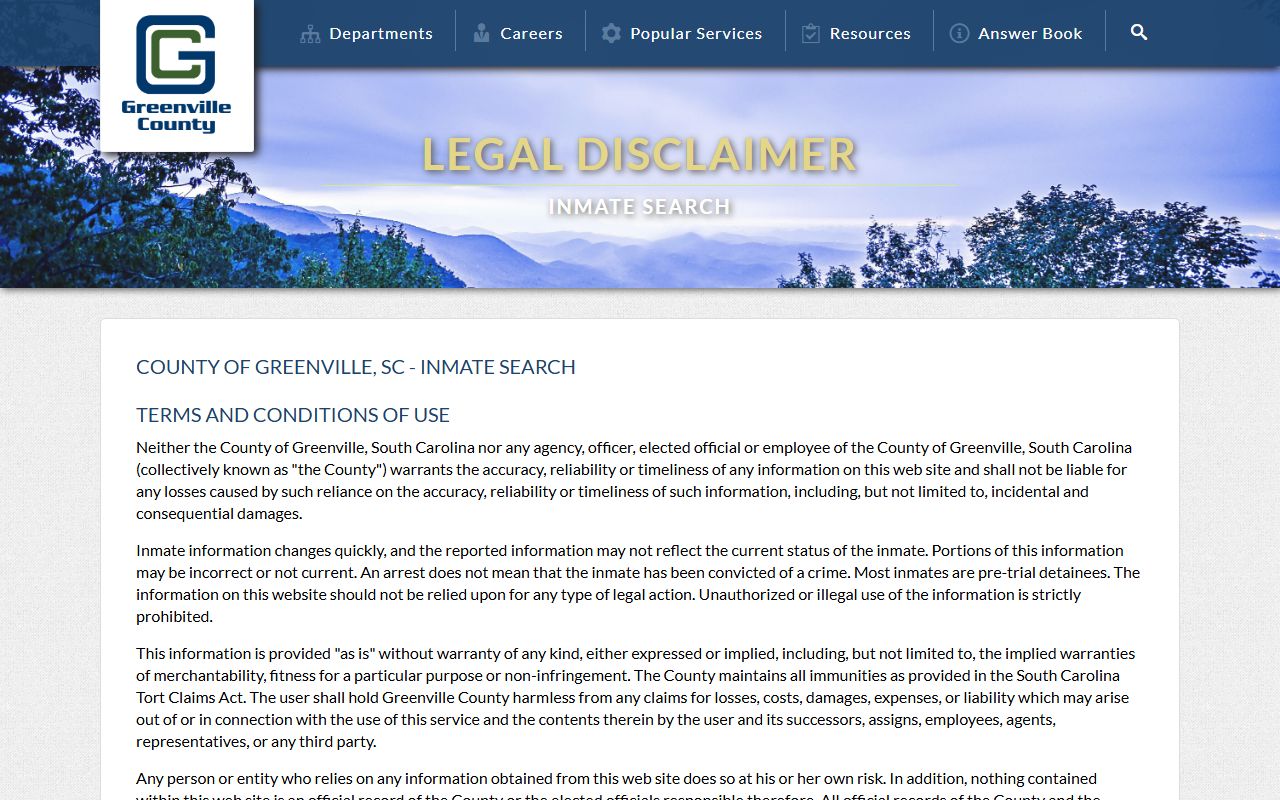
That disclaimer page is the gate you pass through each time. After you accept, follow these steps to run a Greenville County inmate search.
- Open the inmate search portal and read the county disclaimer.
- Click Accept to agree to the terms. Decline closes the portal.
- Enter a last name, and a first name if you have it, to narrow the list.
- Review the list of matching people in custody.
- Click a name to open the full profile with charges and bond.
If a common name returns too many results, add the first name. If you get nothing, check the spelling and try the last name alone. The portal shows current jail records, so a person released hours ago may still appear or may already be gone.
Greenville County Inmate Search Fields
The portal is simple. The main entry point is a name search, and the disclaimer button controls access. The county portal sits behind bot protection, so the exact on-screen field labels can shift, but the search works around a name lookup once you are inside. The table below maps the fields a user meets when using the Greenville County inmate roster.
| Field Label | Type | Required | Notes |
|---|---|---|---|
| Accept Terms | Button | Yes | You must accept the disclaimer before any search runs. |
| Decline | Button | No | Closes the portal and ends the session. |
| Name Search | Text | Yes | Search by last name; add a first name to narrow a long list. |
| Booking / ID | Text | No | A booking or ID number can pull a single record when known. |
| Search | Button | Yes | Runs the lookup and returns matching people in custody. |
Note: The county portal uses security tools that block automated access, so a live record loads only through a normal browser after you accept the terms.
What a Greenville County Inmate Profile Shows
Each profile pulls together the public facts the county releases about a person in custody. The detention FAQ spells out what staff will confirm. You can see that the person is in jail, what they are charged with, and the numbers tied to the case. Bond is listed for each charge. The table below breaks down the fields you can expect on a Greenville County inmate record.
| Field | What It Shows |
|---|---|
| Incarceration Status | Confirms the person is held at the Adult Detention Center. |
| Charges | The offenses the person is booked on; an arrest is not a conviction. |
| Warrant / Ticket / Case Numbers | The numbers that tie the booking to a warrant, citation, or court case. |
| Arresting Officer and Agency | Who made the arrest and which agency they work for. |
| Trial Judge | The magistrate or municipal judge assigned to the matter. |
| Bond or Sentence | The bond amount per charge, or the sentence if one has been set. |
| Holds | Any holds placed by other agencies that affect release. |
Two things the profile does not give freely. Housing location is not posted as static public data, since it can change with facility needs. Release dates are not handed out through the FAQ either. For both, you call or visit the Detention Center or ask the inmate. For the broader case file behind a charge, the criminal records page and the county Public Index carry the court history.
Greenville County Jail Facilities
The Adult Detention Center is a McGee Street complex with three adult housing buildings and a total rated capacity of 1,277. Building One handles intake and release, food service, laundry, medical care, and housing for people with medical and mental-health needs. Building Two is older and now serves mostly as housing. Building Four, the newest, is primarily housing with support services. The two main public addresses are below.
Adult Detention Center - Building One
20 McGee Street
Greenville, SC 29601
864-467-2330
Rated capacity 318
Adult Detention Center - Building Two
4 McGee Street
Greenville, SC 29601
864-467-2330
Rated capacity 511
Building Four adds another 448 beds within the same complex. For a fuller look at capacity, the building history, and how rated beds compare with the daily count, see the inmate population page. The Sheriff's Office posts agency details at gcso.org.
Booking Process in Greenville County
Booking starts when the arresting agency brings a person to the Detention Center. Intake and release are run out of Building One. Staff book the person into the jail management system, search them, inventory their property, and run a medical and mental-health screening. Identifying information is recorded during intake. From there a magistrate or municipal judge handles the bond process and sets either a bond amount or a temporary bond status. Classification staff then decide where the person is housed.
A temporary bond means the person has not yet seen a judge for arraignment and no bond has been set. Bond amounts are listed by charge in the inmate search. Housing is not permanent and can change as the jail's needs shift, so the building a person starts in may not be where they stay. Phone access comes after an account is set up and depends on facility operations. Release does not happen the moment bond is paid. The jail must first receive judicial release, and the goal is to release within four hours of that authorization.
Greenville County Jail Visitation Rules
Adult visitation runs seven days a week. Each inmate gets two visits per week, scheduled in 30-minute blocks. The visit type depends on housing and may use a video monitor, telephone receivers through glass, or a vented glass barrier. Up to three adults can be on a visitor list, and a single visit may include one adult with two minor children. Visitors show a picture ID that matches the list. The schedule below summarizes the weekly visitation setup.
| Day | Visits Offered | Format |
|---|---|---|
| Monday | Yes | By housing assignment |
| Tuesday | Yes | By housing assignment |
| Wednesday | Yes | By housing assignment |
| Thursday | Yes | By housing assignment |
| Friday | Yes | By housing assignment |
| Saturday | Yes | By housing assignment |
| Sunday | Yes | By housing assignment |
An inmate can update the visitor list once every 30 days. The picture ID is surrendered for a visitor badge that must stay visible. Leave purses, bags, and phones in your vehicle or a public locker. The jail bars cell phones, cameras, tobacco, lighters, sprays, and weapons. Conservative clothing is required, and revealing clothing is turned away. Employer and attorney visits do not count against the weekly limit. If you do not know the housing or building, call 864-467-2330.
Note: A Special Housing Unit inmate may have visits suspended for discipline and becomes eligible for visitation on the seventh day after receipt into that unit.
How to Contact a Greenville County Inmate
Mail, phone, and video are the main ways to reach a person at the jail. Personal mail no longer goes straight to the inmate. It is sent to an off-site Securus Digital Mail Center, scanned, and shown on kiosks in the housing units. Photographs sent through postal mail are not allowed. The screenshot below shows the county mail rules.
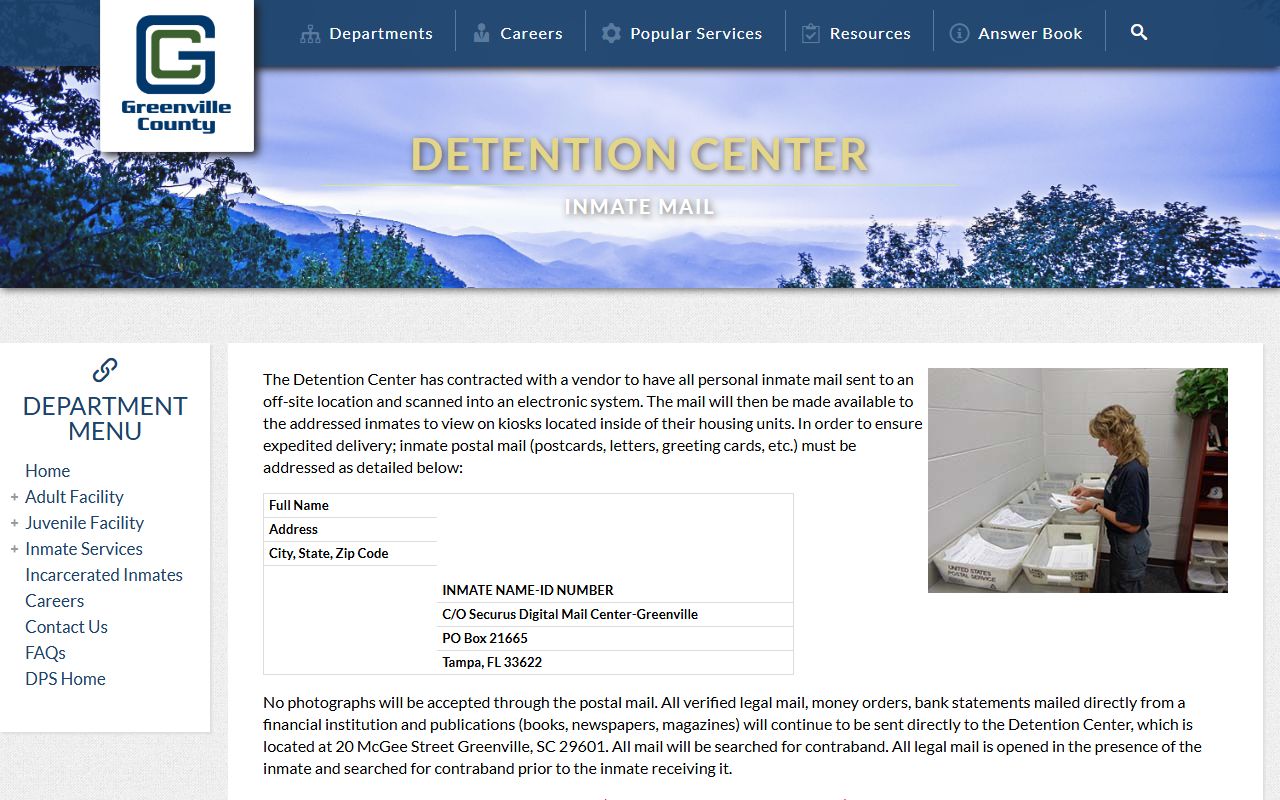
The county inmate mail page gives the exact address format for the Securus Digital Mail Center in Tampa, Florida. Legal mail, money orders, bank statements from a financial institution, and approved publications still go to the Detention Center at 20 McGee Street. Legal mail is opened in front of the inmate and checked for contraband. Paperback books and magazines are allowed only from a publisher or distributor, and no hardcovers are permitted.
Phone service is run by Securus Technologies. An inmate with funds can set up an account and call out. The public can set up a prepaid account by calling 1-800-844-6591 or through the Securus website. The jail does not take incoming calls for inmates or pass along non-emergency messages. Calls are recorded and monitored, except for approved attorney numbers, and attorneys can file a form to keep their numbers off the recording.
Commissary and Inmate Funds
Inmates can buy commissary twice a week through the phone system, paper order sheets, or kiosks, with a $100 cap per order. Items run to snacks, hygiene goods, writing materials, over-the-counter medicine, and undergarments. Friends and family can order packages online at jailpackstore.com. The screenshot below shows the county deposit options.
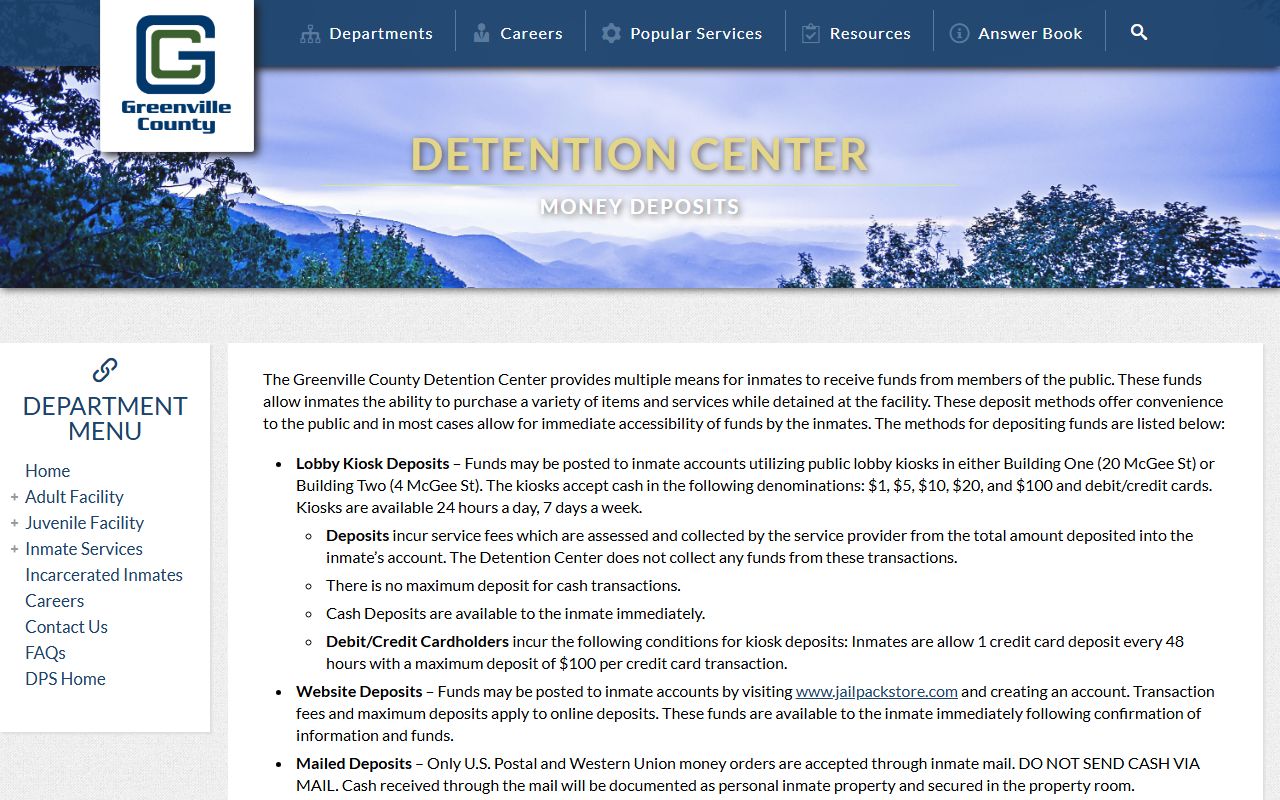
The county inmate money page lists the ways to add funds. A lobby kiosk in Building One or Building Two takes cash and cards around the clock. Online deposits go through jailpackstore.com. Mailed money must be a U.S. Postal or Western Union money order, payable to the inmate's full name, sent to the Accounting Specialists at 20 McGee Street. Cash sent by mail is not credited. Credit card deposits are capped at $100 per transaction with one deposit every 48 hours.
Inmate account balances are private and shared only with the inmate. An indigent inmate, defined as one with a balance under $1 for seven or more days, can get select hygiene and writing items, with the cost logged as account debt. Later deposits pay down that debt at 25 percent per deposit.
Inmate Search vs. State and Court Records
The county roster is one piece of a larger picture. It shows people in the Greenville jail right now. It does not show sentenced state prisoners, who are tracked by the South Carolina Department of Corrections. The screenshot below shows the SCDC public search, which is the right tool once a person is moved to state prison.
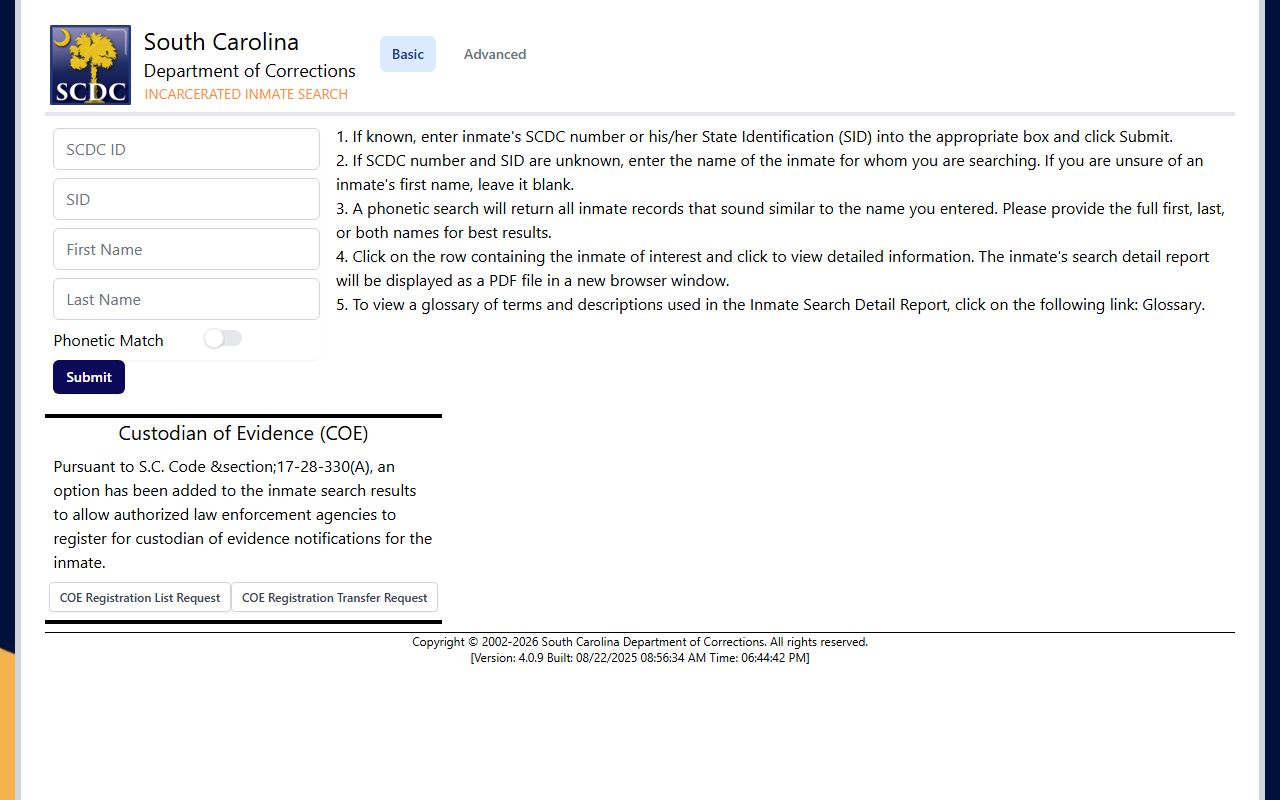
The SCDC public inmate search covers people serving state sentences, not county pretrial detainees. For people who have left the jail, the released inmates page explains how to confirm a release and set up alerts. For active warrants tied to a booking, see the warrant records page. Medical and mental-health details are barred from release under HIPAA, so jail staff cannot share them with family, friends, attorneys, or clergy.